
Response to ClarionIT assessment · November 2026
Repairing CMA's website looks cheaper. Rebuilding is.
ClarionIT's report on compostmanufacturingalliance.com documents the problems well — but compares options without a single dollar figure, and ignores what a slow, dated site costs CMA in lost members and certifications. QOLOS can rebuild for less because AI does the conversion: it reads the old site's data and moves it into a new, faster one, so CMA isn't paying for hours of manual data entry. And the rebuild is not WordPress — no plugins, no page builder, nothing to update.
Where we agree
The assessment confirms the site is failing visitors
Mobile performance score 37/100
Main content takes 17.9 s to appear on a phone. Google's target is 2.5 s.
Server takes 2.6 s per page
Before a single byte is sent — caused by WordPress running 36 plugins on every request.
~70 scripts and 52 stylesheets per page
Including 3 MB of maps code on pages with no map.
~3,550 thin auto-generated pages
Versus 435 real pages, diluting CMA's search ranking.
Editing is genuinely convoluted
ClarionIT confirms the web manager's complaint.
Missing SEO basics
No custom titles/descriptions, no organization schema, no social previews, no robots.txt.
All findings above are quoted from ClarionIT's own report (Google PageSpeed run Nov 13, 2026).
Where we differ
Why “repair” is the more expensive path
“Repair is lower cost.”
Not as a one-time cost. The assessment never puts a dollar figure on repair — its own plan is 3 phases plus an optional look refresh, about 95 hours, or roughly $13,775 — and that is before re-buying the premium plugin licenses the agency holds, whose cost isn't known. That is a five-figure one-time cost to get the site right, and it still leaves CMA on the same slow WordPress engine.
“The foundation is sound.”
The versions are current, but the speed problem is structural: WordPress builds every page on every visit. Even after cleanup, a 18–20 plugin WordPress site rarely gets under 1 s server time. A modern static/edge-rendered site serves pages in well under 0.3 s.
“Migrating content is where the cost and risk are.”
322 products, 29 facilities, 84 pages/articles are structured data — they export cleanly from WooCommerce and Directorist, and AI-assisted conversion maps every field, image and relationship into the new site rather than having a person retype them. 301 redirects for every URL that matters are generated from the old URL list, not hand-built. The 3,325 item-number pages ClarionIT wants removed anyway don't need migrating.
“A rebuild won't fix the root cause.”
The root cause is the plugin model itself — and a rebuild has no WordPress in it. No plugins to sprawl, no page builder, no license renewals: the catalog, locator and filters are built once, as one system.
“Refresh the look without rebuilding.”
A refresh on Beaver Builder + two overlapping add-on packs keeps the exact editing complexity everyone agrees is the problem, and adds more design hours on top of the repair hours.
Mobile view
On a phone, the current site is really poorly designed
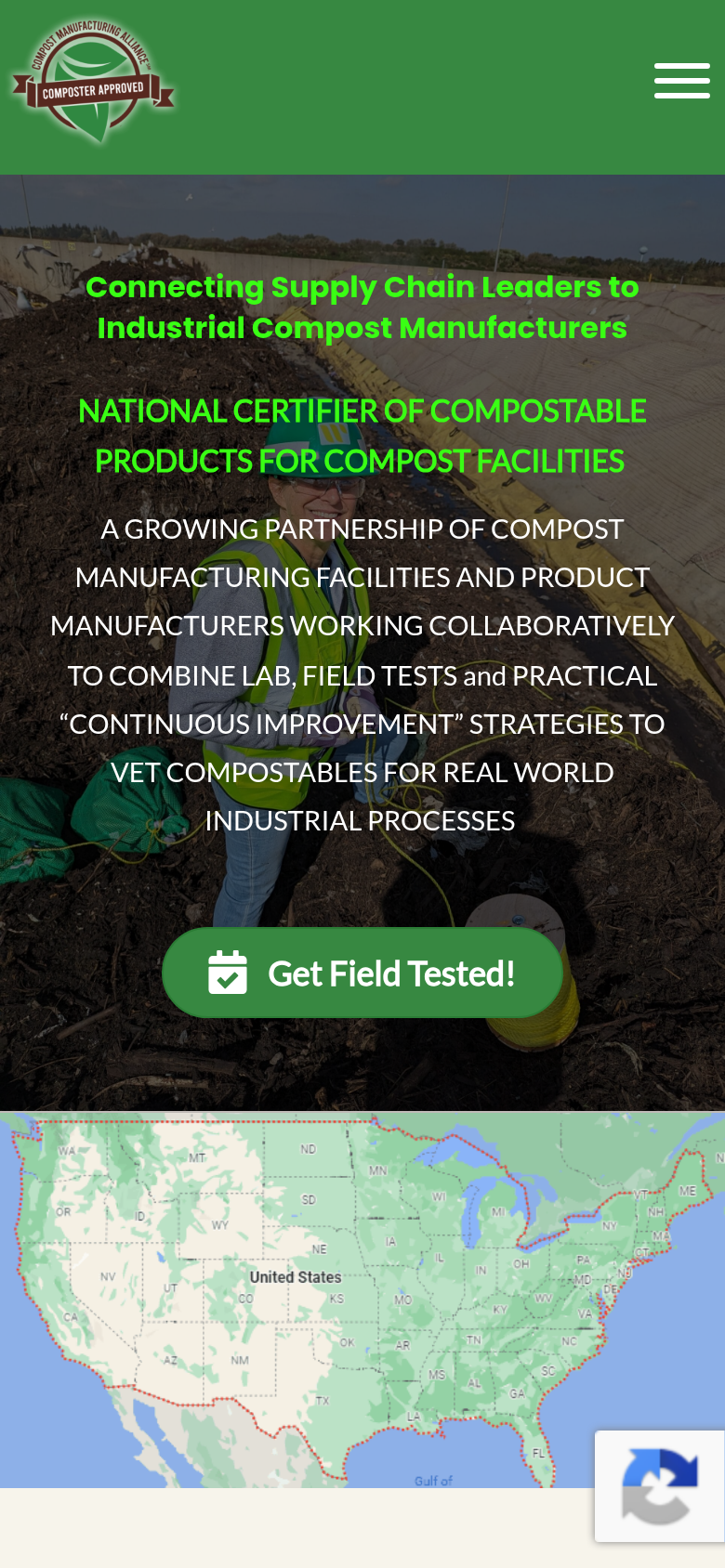
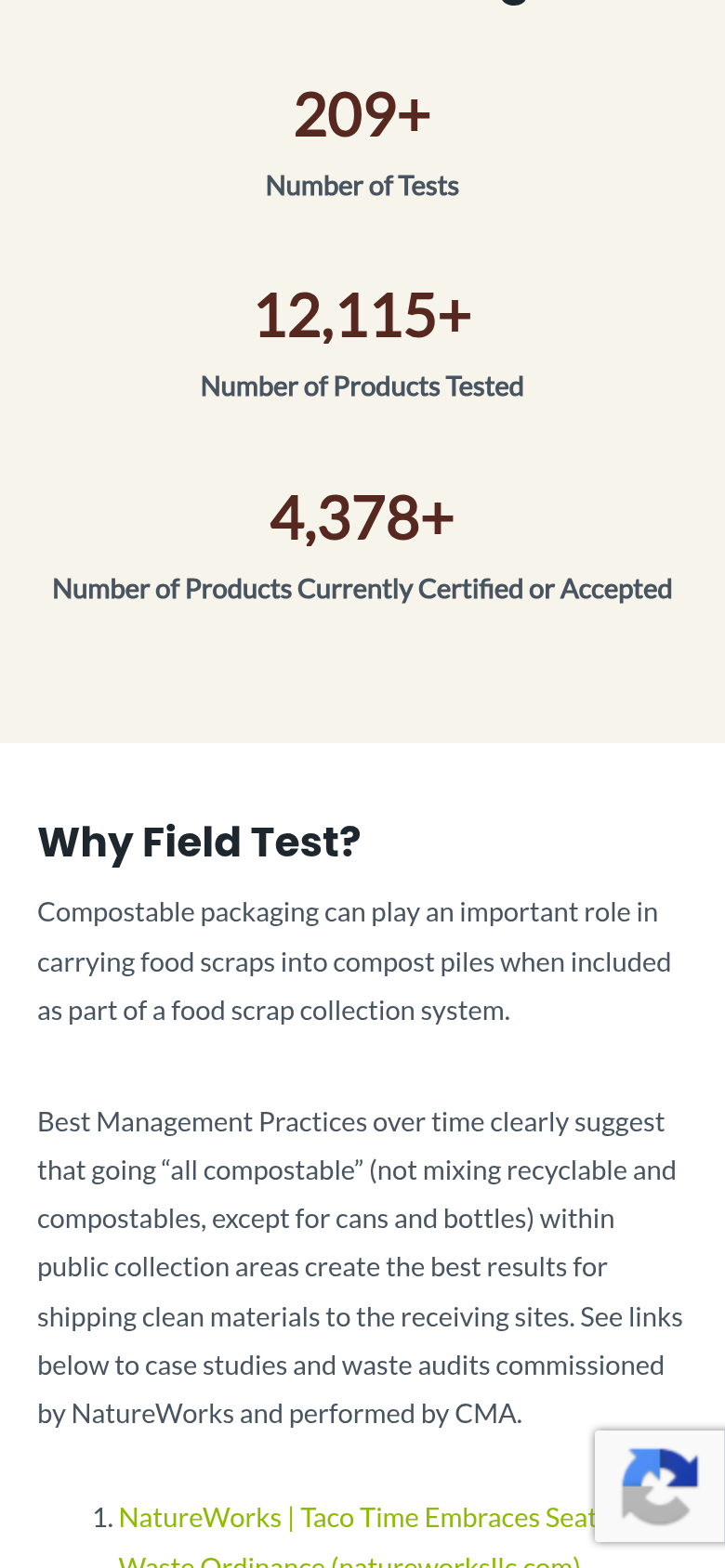
What a phone visitor sees today
- Headline in neon green on a busy photo — hard to read outdoors on a phone.
- Two competing headlines plus an all-caps paragraph fill the whole first screen.
- The only button sits below the fold after 17.9 s of loading.
- A full-width embedded map is the next thing you hit — heavy and hard to scroll past.
- Stats stack one per screen; visitors scroll a long way before learning anything useful.
- The reCAPTCHA badge covers text and links on every screen.
Most visitors arrive on phones. ClarionIT measured a 17.9-second load and a mobile score of 27/100 — the repair plan speeds things up but keeps this layout. The rebuild designs for the phone first.
NATIONAL CERTIFIER
Compostables, proven in real facilities.
Lab and field testing for real-world composting.
Design concepts
Five directions for what the new homepage could look like
 Field testingApproved productsFacilitiesResourcesAboutGet field tested
Is it composter approved?
Search 4,378+ certified and accepted products by brand, item or material.
Example results
Facility network
Find a facility near you
29 partner compost facilities across the U.S. and Puerto Rico. Click a pin to see who's there.
How certification works
Field testingApproved productsFacilitiesResourcesAboutGet field testedNational certifier of compostable products
If it's labelled compostable, we prove it in the pile.
CMA field-tests packaging at working compost facilities — so composters accept it and brands can stand behind it.
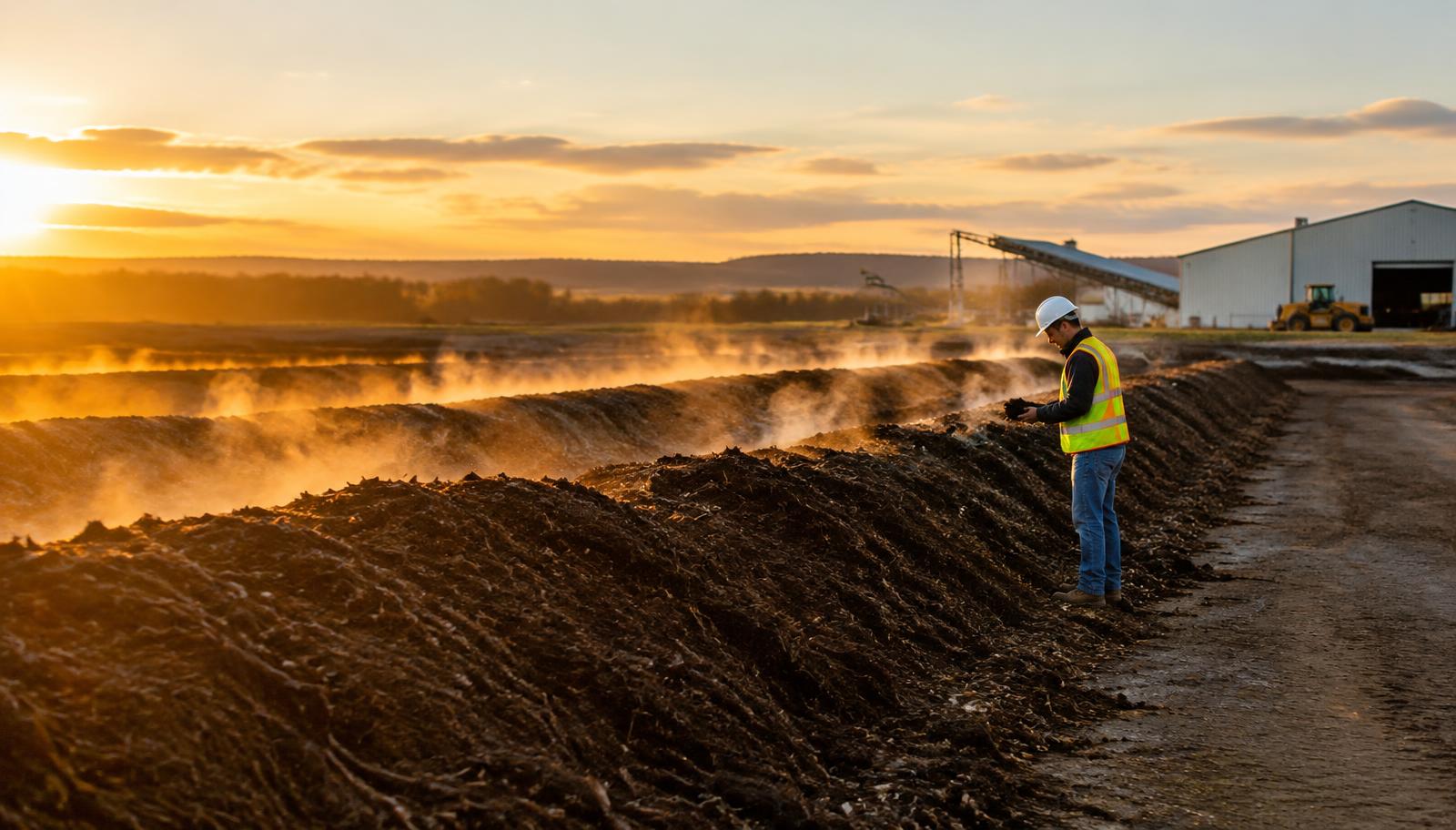
Facility network
Tested where compost actually gets made
29 partner compost facilities across the U.S. and Puerto Rico. Click a pin to see who's there.
Field testingApproved productsFacilitiesResourcesAboutGet field testedBy compost manufacturers, for compost manufacturers
Good packaging ends up as good soil.
We combine lab results, field trials and continuous improvement to vet compostables for real-world industrial processes.
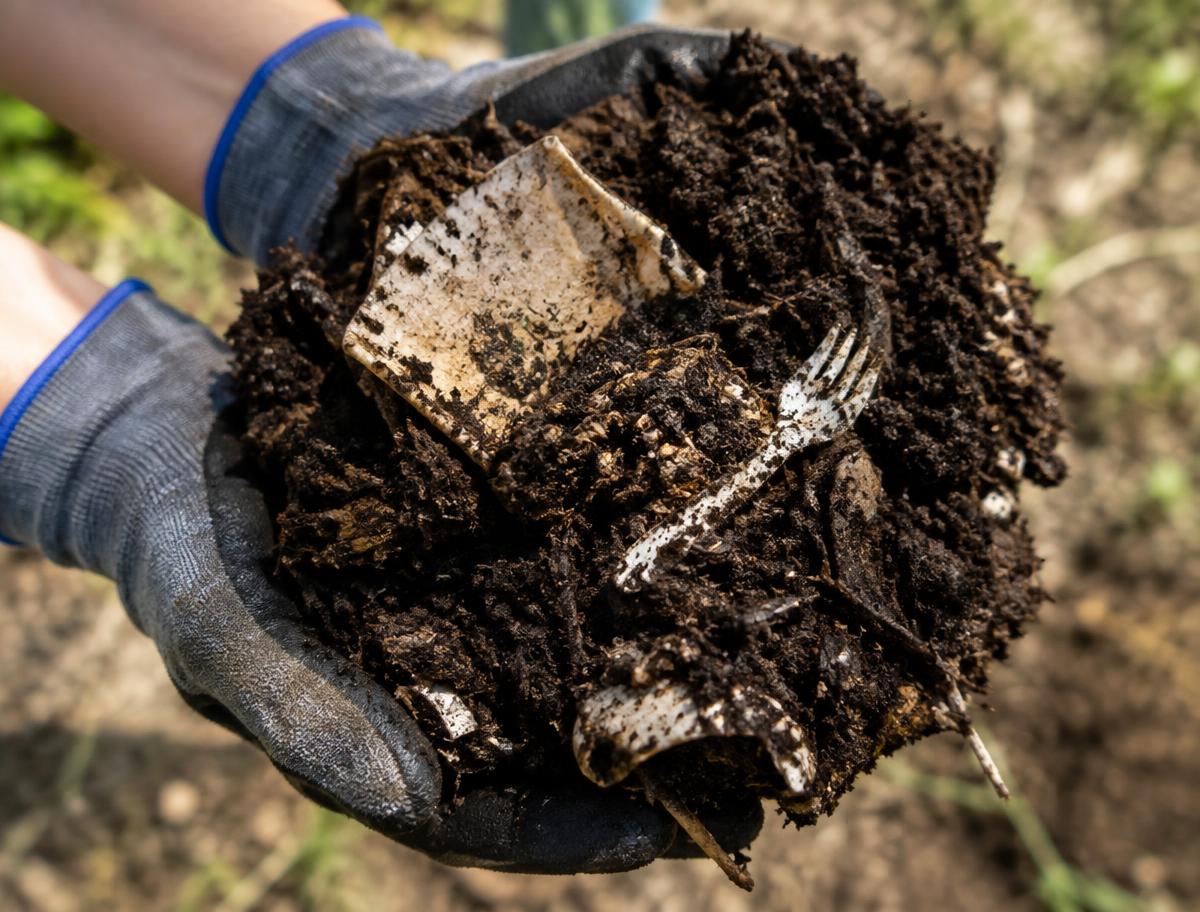
“Going all-compostable in public collection areas creates the cleanest material for receiving sites.”
— From CMA waste audits commissioned by NatureWorks
Facility network
Our partners, coast to coast
29 partner compost facilities across the U.S. and Puerto Rico. Click a pin to see who's there.
Field testingApproved productsFacilitiesResourcesAboutGet field tested209+ field tests and counting
Real compost.
Real conditions.
Real answers.
The certification that compost facilities actually trust.
Facility network
A network that never sleeps
29 partner compost facilities across the U.S. and Puerto Rico. Click a pin to see who's there.
Field testingApproved productsFacilitiesResourcesAboutGet field testedThe Composter Approved seal
Approved by the people who actually compost it.
Every approval is earned in a working facility — not just a lab.
How certification works
Facility network
Where the testing happens
29 partner compost facilities across the U.S. and Puerto Rico. Click a pin to see who's there.
Concept mock-ups for discussion. Field photos are stand-ins; the final site uses CMA's own photography. Map pins come from CMA's current facility directory.
How we do it
AI does the conversion — that's what brings the rebuild cost down
Reads the old site
AI reads the WordPress export — 322 products, 29 facilities, 84 pages and articles — and maps every field, image and relationship onto the new structure.
Converts, doesn't retype
Content, images and metadata are transformed by script instead of being cut and pasted page by page. A person then reviews the result.
Redirects generated
A 301 for every indexed URL is produced automatically from the old URL list, so search rankings and shared links survive the move.
Design options in hours
The five homepage directions above are AI-generated starting points. CMA picks one and a designer refines it, instead of paying for weeks of exploratory layout work.
Built once, as one system
The new site has no WordPress in it: the catalog, the facility map and the filters are written once as one codebase — no plugins, no license renewals, no overlapping add-on packs.
Humans check the numbers
Every product count, certification figure and facility pin is verified against the old site before launch. AI speeds the work up; it doesn't sign it off.
A rebuild done the traditional way — hand-migrating the catalog, the locator and 84 pages, then building the design from scratch — runs to hundreds of hours at the same $145/hr. AI-assisted conversion takes the mechanical part off the bill, which is why QOLOS can quote $3,675 instead.
Recommendation
Rebuild once, and stop paying for the old site
No WordPress
The rebuild runs on no WordPress at all — no plugins, no page builder, nothing to update or renew.
Lower one-time cost
$10,100 less than the full repair — because AI does the conversion, not billable hours of data entry.
Better design
A modern, credible site — the repair plan only offers a cosmetic refresh.
Easier editing
No Beaver Builder add-on packs, no overlapping plugins.
Fast on a phone
Pages appear in under 2 s instead of 17.9 s — the difference between a visitor staying and leaving.
Search-ready
Custom titles, organization schema and social previews — the basics the assessment found missing.
The minimum fix gets by
Updating plugins is housekeeping, not a fix. The site stays slow and dated and keeps losing visitors.
Repair keeps the engine
Same WordPress, same per-visit page building, same plugin habit.
Repair delays the redesign
Pay for cleanup now and a redesign later.
Pricing
What CMA pays, and what it saves
One-time: minimum fix
$1,740
Plugins, cache, quick wins. Gets by — the site stays slow and dated.
One-time: full repair
$13,775
95 hours on the same WordPress engine — before re-buying the premium plugin licenses.
One-time: rebuild
$3,675
No WordPress, no plugins, no licenses to buy. New design, fast — AI-assisted conversion keeps the price down.
CMA saves by rebuilding
$10,100
one-time, versus the full repair.
Figures use the editable assumptions below. Change them and every number updates.
One-time cost
What each option costs once, to get the site right
Assumptions (edit me)
Keep as is
$0
Minimum fix (update plugins, quick wins)
$1,740
Full repair (ClarionIT plan)
$13,775
Rebuild (QOLOS)
$3,675
Minimum fix (getting by)
- Update plugins and themes, clear cache, fix broken links: 12 h = $1,740
- Same WordPress engine, same 36 plugins building every page on every visit
- No design work — the dated, cluttered layout stays exactly as it is
Full repair (ClarionIT's plan, priced)
- Phase 1 cleanup & performance: 35 h
- Phase 2 SEO & structured data: 20 h
- Phase 3 security, editing, staff guide: 15 h
- Optional look refresh: 25 h
- Plus re-buying the agency-held premium plugin licenses — cost unknown, on top of the hours above
Rebuild estimate (QOLOS)
- No WordPress — no plugins, no Beaver Builder, nothing to update or renew
- New modern design, mobile-first: included
- One product catalog + one facility locator (replaces 11 plugins)
- AI-assisted conversion of 322 products, 29 facilities, 84 pages/articles; images optimized — the mechanical work isn't billed by the hour
- 301 redirects for every indexed URL, generated from the old URL list; full SEO, schema & social previews
- Simple editor CMA staff can use without touching layout
Labor at $145/hr. One-time costs only. CMA's traffic and inquiry numbers aren't known, so this analysis makes no estimate of visitors or customers lost — the speed and design problems are shown only as ClarionIT measured them.